An Important Step Toward a Future of Sustainable Materials
Grässlin Kunststoffe and Exipnos Form Partnership forBioCelain®
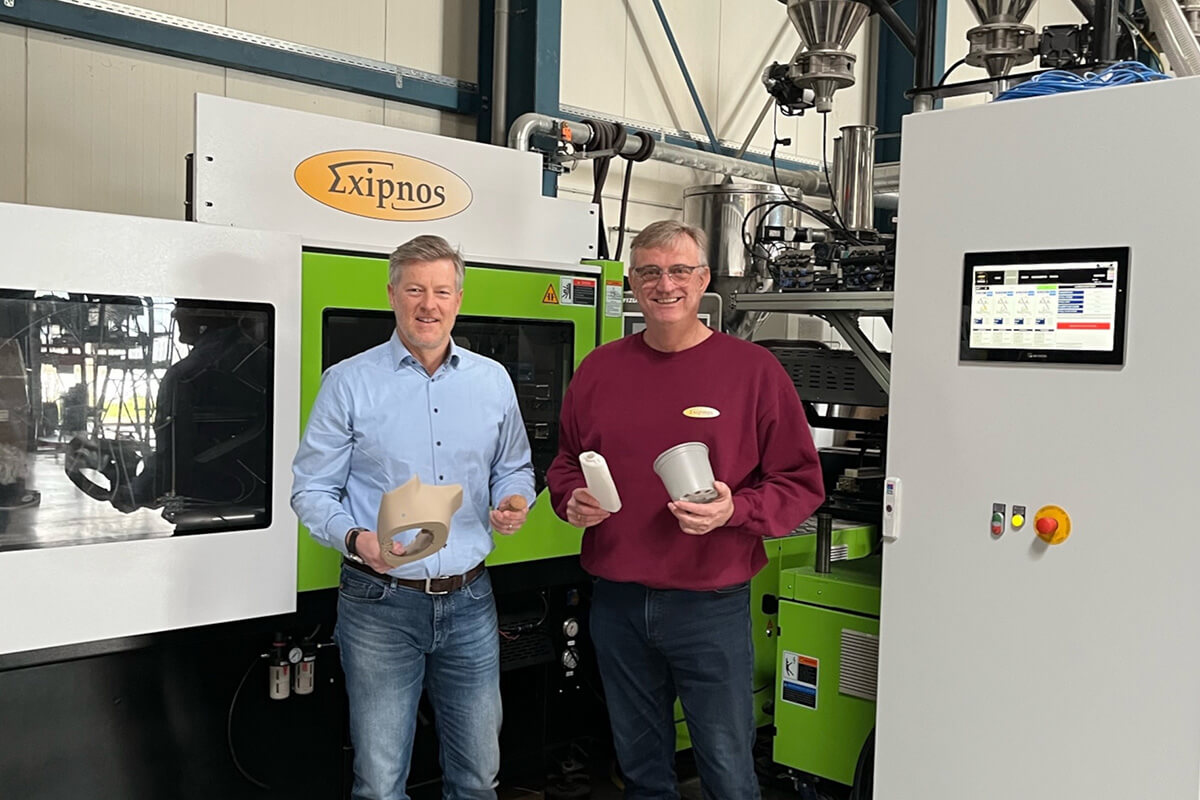
Two partners, one common goal: the future of sustainable plastics. Exipnos and Grässlin Kunststoffe are now working closely together to develop and implement exciting application projects—in collaboration with partners and customers—for the PBS compoundmarketedunder the nameBioCelain®.“With Exipnos, we are gaining a partner that is as accomplished as it is innovative and forward-looking, with many years of experience in sustainable plastic compounds,” says Holger Popp, authorized signatory at Grässlin.“BioCelain®is an important new addition that enriches our diverse portfolio of sustainable products with a high-quality biopolymer.”
Those interested can experienceBioCelain®firsthand at the Grässlin Plastics Forum on Thursday, June 20, 2024, in Kirchlengern. Registration is open through June 7, 2024, athttps://www.graesslin-kunststoffe.de/anmeldung.
Background: Grässlin already offers customers from virtually all sectors and industries a wide range of sustainable materials based on renewable raw materials such as starch, tall oil, or castor oil, as well as materials derived from physical or chemical recycling. In addition,BioCelain®is a bio-based and biodegradable PBS-polyester polymer that is compounded to meet specific requirements. The current Exipnos portfolio offers PBS compounds for a wide range of applications; they are easy to process and impact-resistant. The various grades can be used in injection molding, extrusion, and blow molding, as well as in 3D printing—in an energy-efficient and environmentally friendly manner. At the end of its product life, the biopolymer is 100 percent recyclable;BioCelain®can be granulated and reused in the manufacturing process to create new, equivalent products.
As part of the Rubio project, which involves 18 companies and research institutions across the entire value chain, Exipnos in Merseburg is working to produceBioCelain®from 100 percent renewable raw materials in the near future. “Plastics made from plant-based waste and secondary raw materials that are easy to recycle, can be processed on existing machinery, and are also biodegradable: That is our vision for a sustainable plastics industry,” says Exipnos Managing Director Peter Putsch: “With Grässlin as our partner, we can achieve our goal of making ourBioCelain®known and accessible on the market for many innovative applications.”
This development is well on its way to becoming a true game-changer in the market for sustainable materials.BioCelain®stands for a high degree of sustainability. For example, natural, non-toxic mineral pigments—such as Rügen chalk, Lusatian ochre, or Anhaltian shale clay—are used to color the material in natural shades. The applications are diverse and range from plant pots and tableware to nonwovens, films, and structural components. Each customer receives a custom compound tailored specifically to their requirements.
Grässlin and Exipnos aim to introduceBioCelain®to the market, develop exciting projects, and raise awareness among potential customers about this sustainable material as a forward-looking alternative for countless applications in the household, medical technology, automotive, and packaging industries.